Keep connected
Our investment management team is made up of engaged thought leaders. Get their latest commentary and stay informed of their frequent media interviews, all delivered to your inbox.
Jeff Herold
April 4, 2019
The shift to lower yields in Canadian bonds was similar to, but slightly larger, than the drop in U.S. Treasury yields. As a result, Canadian yields dropped even further below comparable U.S. yields. Indeed, partway through the month, the spreads between Canadian and U.S. yields hit all-time records before recovering somewhat by month end. In the 1980’s and the early 1990’s Canadian yields were substantially higher than U.S. yields, but that changed as Canada adopted its 2% inflation target and the federal government began to correct its chronic deficits. In recent years, Canadian yields have moved steadily lower than their U.S.
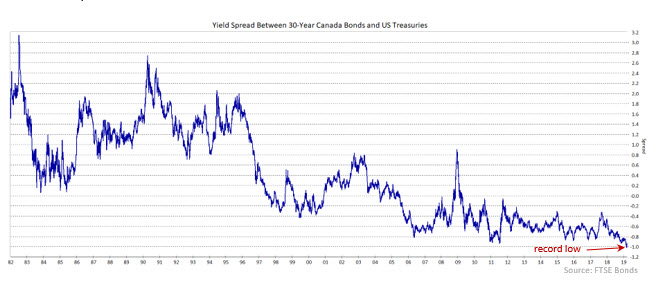
Federal bonds returned 1.85% in the month as lower yields resulted in higher bond prices. The provincial sector earned 3.12% with its longer average duration producing larger price gains as benchmark yields fell. Having tightened 13 basis points in the previous two months, provincial yield spreads widened by 2 basis points in March. Investment grade corporate bonds earned 1.99% in the month. Demand for new issues was strong and, as a result, corporate yield spreads widened only one basis point despite $11.8 billion of new issues coming to market. Non-investment grade issues lagged higher quality issues, earning only 1.36% in the period. Real Return Bonds earned 4.03% in the month as their very long average duration produced strong gains as yields declined. Preferred shares declined -0.46% in the month; rate reset issues declined because investors worried that the drop in 5-year bond yields would result in lower dividends going forward.
Our investment management team is made up of engaged thought leaders. Get their latest commentary and stay informed of their frequent media interviews, all delivered to your inbox.